Xalbador
Remembering Xalbador
By Joxe Mallea-Olaetxe
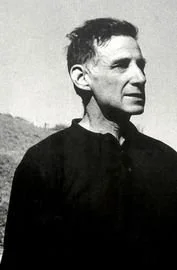
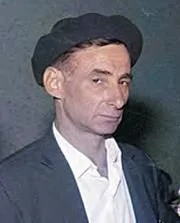
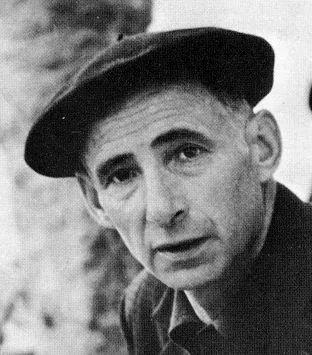
As most Basques know, Xalbador (Fernando Aire) was one of the greatest bertsolaris that ever lived. Born in Urepele in 1920, he died there as well in 1976. He raised a family and his son Mixel was also a bertsolari. His wife Leonie became an important part of Xalbador’s life, and we can say that she even influenced his singing career.
Xalbador felt in his soul the pain of a divided Euskal Herria that was losing its culture at a time when few other people in Iparralde (North Basque Country) seemed to be aware. He didn’t believe that there was a Baxenabarre (Lower Navarre) on the north side of the Pyrenees and a Nafarroa (Navarre) on the other side. Xalbador didn’t agree with the traditional Basque motto “Zazpiak Bat” (The Seven are One) because he said that there was only one Navarre. At age 11 while attending school, the teacher, a Frenchman, tried to force him so speak in French and give up Euskara. During that time, in France as well as Spain, Basque children were subjected to a repressive cultural genocide, but Xalbador wouldn’t put up with it. So, he quit school and went to his “etxola” (sheepherder hut) in the mountains to herd sheep.
The mountains and sheepherder life were an inspiration for him but did not compare with the spiritual power of his beloved “sortetxe” or farmstead, and with his “etxola.” Xalbador was a poet of the heart, driven by his feelings and nostalgia, and nothing could replace the emotional and inspirational power derived from the old farmstead where he was born, and the “etxola,” his home in the mountains.
In the mountains he did more than herd sheep: he also tried to become a bit more educated and began practicing bertsogintza. By age 14 he had put together a small vocabulary that he could us in his bertso performances. Two years later the first such appearance took place in a bar in Urepele and, as he tells the story, it was prompted by a Gipuzkoan bertsolari that he watched singing. The man was not much of a bard, but he inspired Xalbador. After that, he and a few friends would gather at the bar on weekends and start singing “bertsoak.” It was a bertso school with plenty of incentive: The one who could not finish or improvise the worst verses paid the bar tab. Xalbador never had to pay.
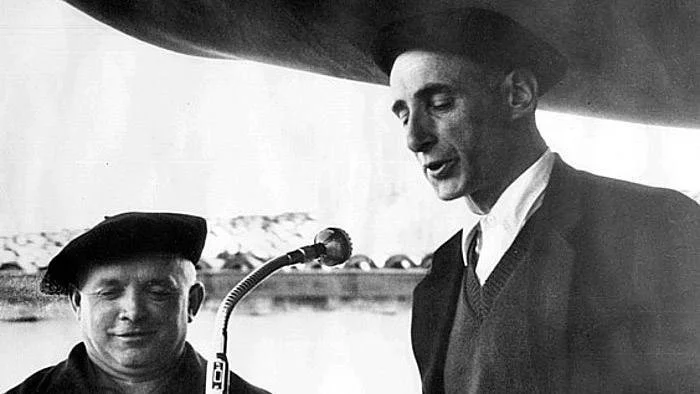
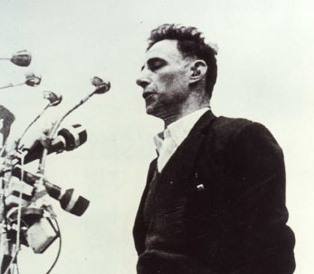
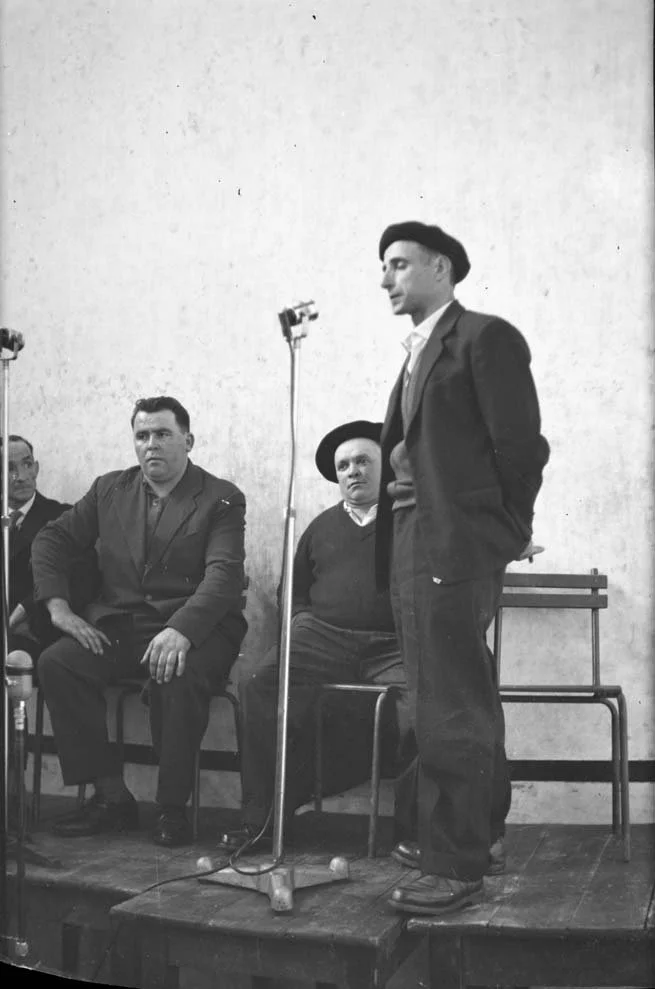
Xalbador’s first performance in a public competition with other bards took place in Donibane Lohizune (St. Jean de Luz) in 1946. There were sixteen singers, some of them well-known, and Xalbador came in seventh. Two years later, at Sara (Lapurdi), he won his first competition. After that, Xalbador’s public singing continued to increase, slowly at first, and much faster later on. Usually, Mattin of Ahetze was his companion and the two of them performed often all over Euskal Herria, north and south. They often competed against the well-known bertsolaris Uztapide and Basarri of Gipuzkoa.
Xalbador educated himself by reading Basque books, and his writings proved him without peer in the command and sensitivity of the language. In deeds he proved himself to be an extremely patriotic individual, torn by the sad situation of the Basque culture and pained for the future of the country. It was Xalbador who started a small revolution in the Catholic Church in Iparralde of the 1950s, when he began singing verses in Basque during the Sunday Mass offertory.
They say there are as many Basques in the diaspora of the Americas as there are in Europe. Xalbador’s Urepele is one locality that has contributed many emigrants, especially to the American West. In song Xalbador tells us that seven or more members of his immediate family resided in California, so, not surprisingly he and Mattin of Ahetze visited the Golden State in 1960. They entertained the Basque audience with their poetic wit, and on one occasion their performance was cut short. The local Basques were so upset that they formed the Basque Club of San Francisco, that very same evening. Xalbador returned to California in 1972, this time chiefly to visit his son Mixel, who was working in Los Banos as a sheepherder. He also visited Idaho.
The town of Donibane Lohizune honored him five months before he died with a gold medal. Incredibly, Urepele, his hometown, honored him on the day he died. It was a huge day for him, because his book Odolaren Mintzoa (The Call of Blood) had been just released, and some 2,000 people came from all over the Basque Country to honor him. At the time Xalbador was ill, but perhaps the emotion of the day was too much for him. He suffered a heart attack near the public square and died a few hours later. His last words were “Gure herria ez dut behar bezala eskertzen ahal” (I could not thank the people the way I should).